Theme Project Timeline Template
Week-by-week plans for a 4-week refresh, an 8-week custom build and a 12-week replatform, with client inputs, review rounds and buffers.
Free. No email required. Use your browser’s print dialog and choose “Save as PDF”.
Theme Project Timeline Template
Week-by-week plans for a 4-week theme refresh, an 8-week custom build and a 12-week replatform. Each one lists what the client owes you, when review rounds happen and where the buffer goes.
How to Use This Template
Pick the plan closest to your project, fill in the dates, and send it to the client with the proposal. Every week has two lists: what you deliver and what the client owes you. Most theme projects slip because of late client inputs, so those get the same weight as your own work.
Rules that apply to all three plans
- Weeks are working weeks from kickoff. Week 1 starts on kickoff day, not on contract signature.
- Client inputs have dates. If access and content aren't in by the date listed, the launch date moves and you say so in writing that day.
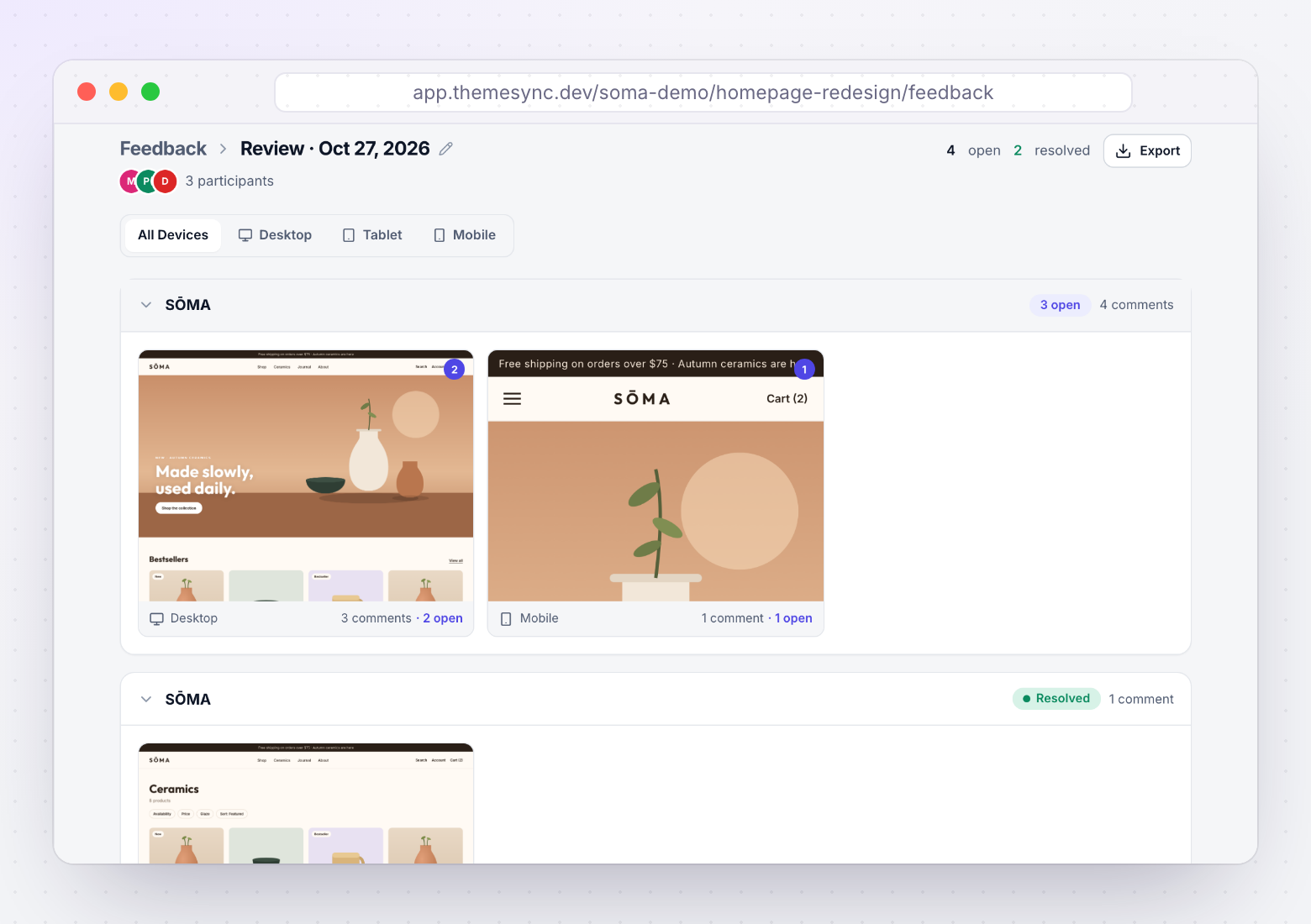
- One consolidated feedback submission per review round, by a fixed deadline. Name the person who consolidates it.
- Buffers sit after each review round, not as one block at the end.
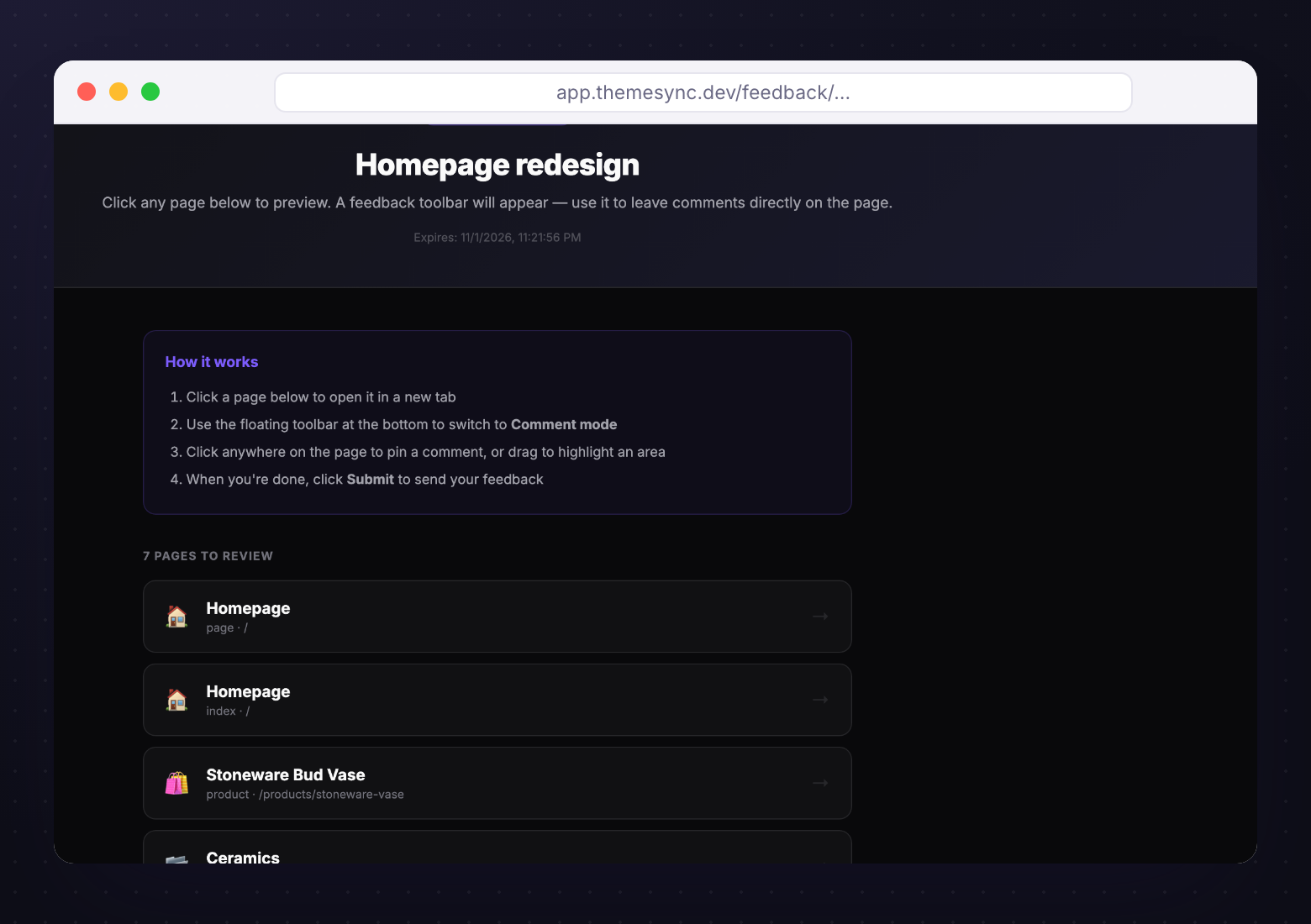
- Review happens on a development theme with a preview link, so review rounds don't add draft themes to the store.
- No Friday launches. Launch Tuesday to Thursday, with the developer available the next day.
Project details
| Client / store | |
| Plan | 4-week refresh 8-week build 12-week replatform |
| Kickoff date | |
| Target launch date | |
| Feedback consolidator (client side) | |
| Templates in scope | |
| Timeline version | v1, [date] |
Send changes as dated versions ("Timeline v2, 14 Nov"). A dated version is easier to point back to than a thread of emails about moved dates.
Plan 1: The 4-Week Theme Refresh
For a refresh that keeps the existing theme and changes the header, brand styles and a handful of templates. It only works if content arrives in week 1 and review rounds stay at 3 to 5 business days.
| Phase | Wk 1 | Wk 2 | Wk 3 | Wk 4 |
|---|---|---|---|---|
| Kickoff, access, style tile | ||||
| Content and assets due | ||||
| Header, footer, homepage, styles | ||||
| Review round 1 | ||||
| Revisions, remaining templates | ||||
| Review round 2 + 2-day buffer | ||||
| Cross-browser QA, sign-off | ||||
| Launch (Wed/Thu) |
| Week | We deliver | Client owes us | Dates |
|---|---|---|---|
| 1 | Kickoff call. Style tile (colours, type, buttons) approved by Friday. | Client Collaborator access and Theme Access password on day 1. Logo files, homepage copy, hero images, list of pages to change. | |
| 2 | Header, footer, homepage, global styles. Round 1 opens Thursday. | Client Round 1 feedback by the following Tuesday. | |
| 3 | Round 1 revisions and remaining templates. Round 2 opens Thursday. | Client Round 2 feedback within 3 business days. | |
| 4 | Two days of buffer. QA on desktop and mobile. Live theme backup. Launch. | Client Written sign-off per page. |
If the homepage copy isn't in by the end of week 1, move the launch date that day rather than compressing round 2.
Plan 2: The 8-Week Custom Theme Build
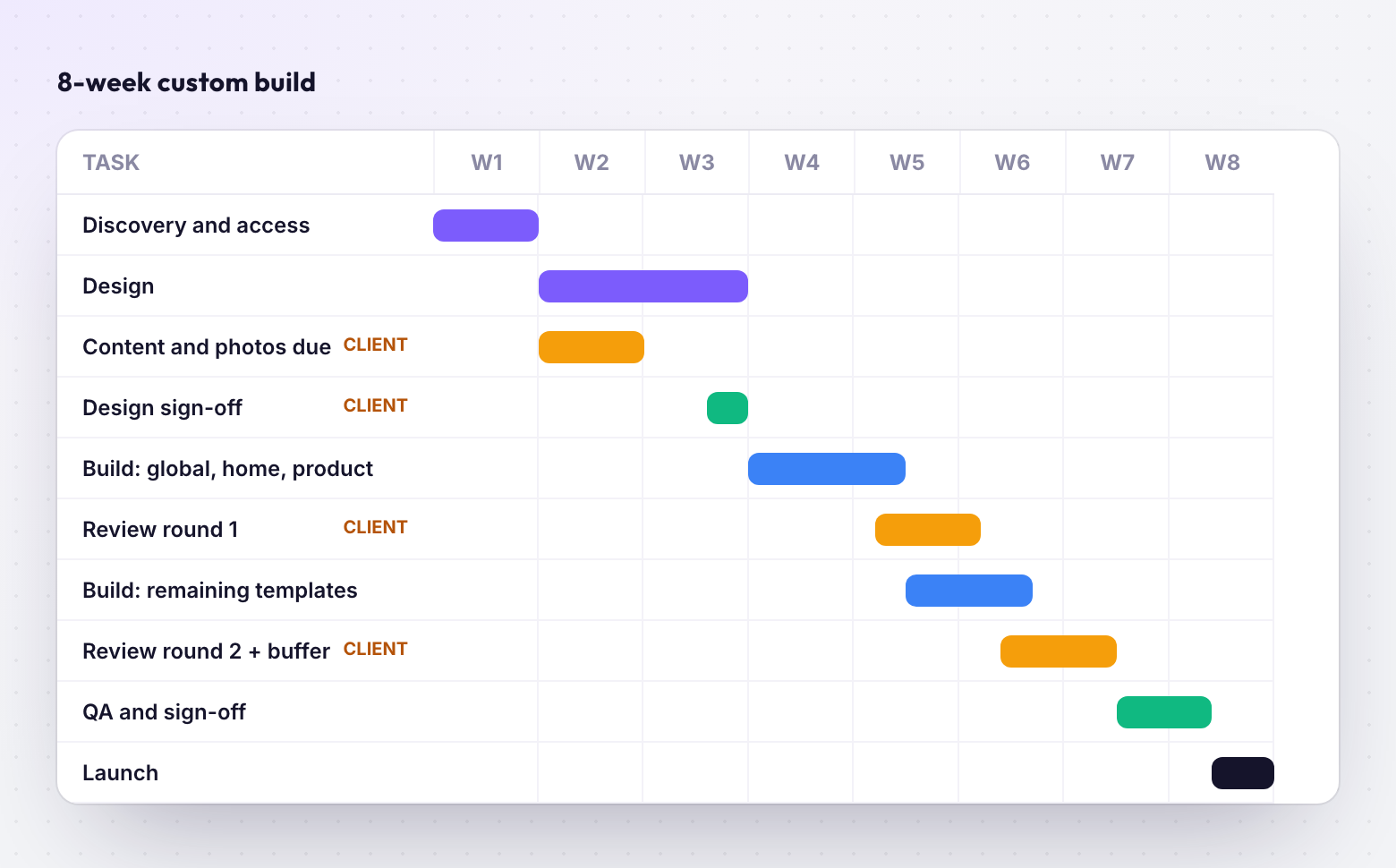
For a new custom theme, or a heavy rebuild of a paid theme, with roughly 8 to 12 templates: homepage, product, collection, cart, about, contact, FAQ, blog, article and a landing page.
| Phase | 1 | 2 | 3 | 4 | 5 | 6 | 7 | 8 |
|---|---|---|---|---|---|---|---|---|
| Discovery, access, template list | ||||||||
| Access, apps, brand guidelines due | ||||||||
| Design | ||||||||
| Copy, photography, metafield content due | ||||||||
| Design sign-off | ||||||||
| Build | ||||||||
| Review round 1 (homepage, product) | ||||||||
| Review round 2 (all templates) + buffer | ||||||||
| QA, performance, sign-off | ||||||||
| Launch and handoff |
Client inputs due
| Due | Input | Received |
|---|---|---|
| End of week 1 | Collaborator access, Theme Access password, app list, brand guidelines, reference stores | |
| End of week 2 | Final homepage and about copy, product photography, metafield content (size charts, ingredients, care) | |
| End of week 3 | Written design approval for every template in scope | |
| Each review round | One consolidated set of feedback by the round deadline |
The client reviews homepage and product page in week 5 while you build collection, cart and content pages. Direction problems get caught before they're copied into every template.
If metafields are involved, list the exact namespace and key during discovery. Definitions live on the store, and a missing one is a common reason a preview section renders empty.
Plan 3: The 12-Week Replatform
For a move to Shopify from WooCommerce, Magento or BigCommerce, or a merge of several stores. The theme is half the project. Products, customers, redirects and apps are the other half, and the client owns most of those decisions.
| Phase | 1 | 2 | 3 | 4 | 5 | 6 | 7 | 8 | 9 | 10 | 11 | 12 |
|---|---|---|---|---|---|---|---|---|---|---|---|---|
| Discovery, app and data audit | ||||||||||||
| Design + test import | ||||||||||||
| Content and design sign-off due | ||||||||||||
| Build + replacement apps | ||||||||||||
| Review round 1 (shopping path) | ||||||||||||
| Full import, round 2, buffer | ||||||||||||
| QA, redirects, test orders | ||||||||||||
| Delta import, launch, DNS |
| Weeks | We deliver | Client owes us |
|---|---|---|
| 1–2 | App and integration list with Shopify replacements. Product and customer sample export. URL structure and redirect plan. | Client Admin access to the old platform, app decisions, business-critical pages by traffic. |
| 3–4 | Design. Test import of 20 to 30 products. | Client Check imported products for variants, images and metafields. Content and design sign-off by end of week 4. |
| 5–7 | Templates built against the test data. Replacement apps installed and configured. | Client App account setup and billing approvals. |
| 8 | Round 1 opens: homepage, collection, product, cart. | Client Consolidated round 1 feedback. |
| 9–10 | Full data import. Round 2 on all templates, then 3 to 5 days of buffer. | Client Consolidated round 2 feedback. |
| 11 | QA on every template and device, redirect testing, test orders. | Client Sign-off per page. Test order approval. |
| 12 | Final delta import, launch, DNS change, monitoring. | Client DNS access, launch-day contact. |
Keep the old site live and unchanged until DNS moves. Theme edits on the old site mid-migration create differences nobody planned for.
Buffers, Review Rounds and Adjustments
Where the buffer goes
| Buffer | 8-week plan | 12-week plan |
|---|---|---|
| After each client review round | 2 days | 3 to 5 days |
| Between final sign-off and publish | 1 day | 1 day |
| Retail clients in late November | No review rounds or launches during the BFCM code freeze | |
Review round rules (agree before round 1)
| Round length | 3 / 5 business days |
| Feedback format | Comments pinned on the preview |
| Who consolidates | |
| If the deadline passes with no feedback | Current state is approved Launch moves |
Adjusting a plan to a real project
| Change | What to do to the plan |
|---|---|
| More templates | Add about half a week of build per two extra templates. Put them in round 1 if you can. |
| Several decision-makers | Make each round 5 business days and name one consolidator. |
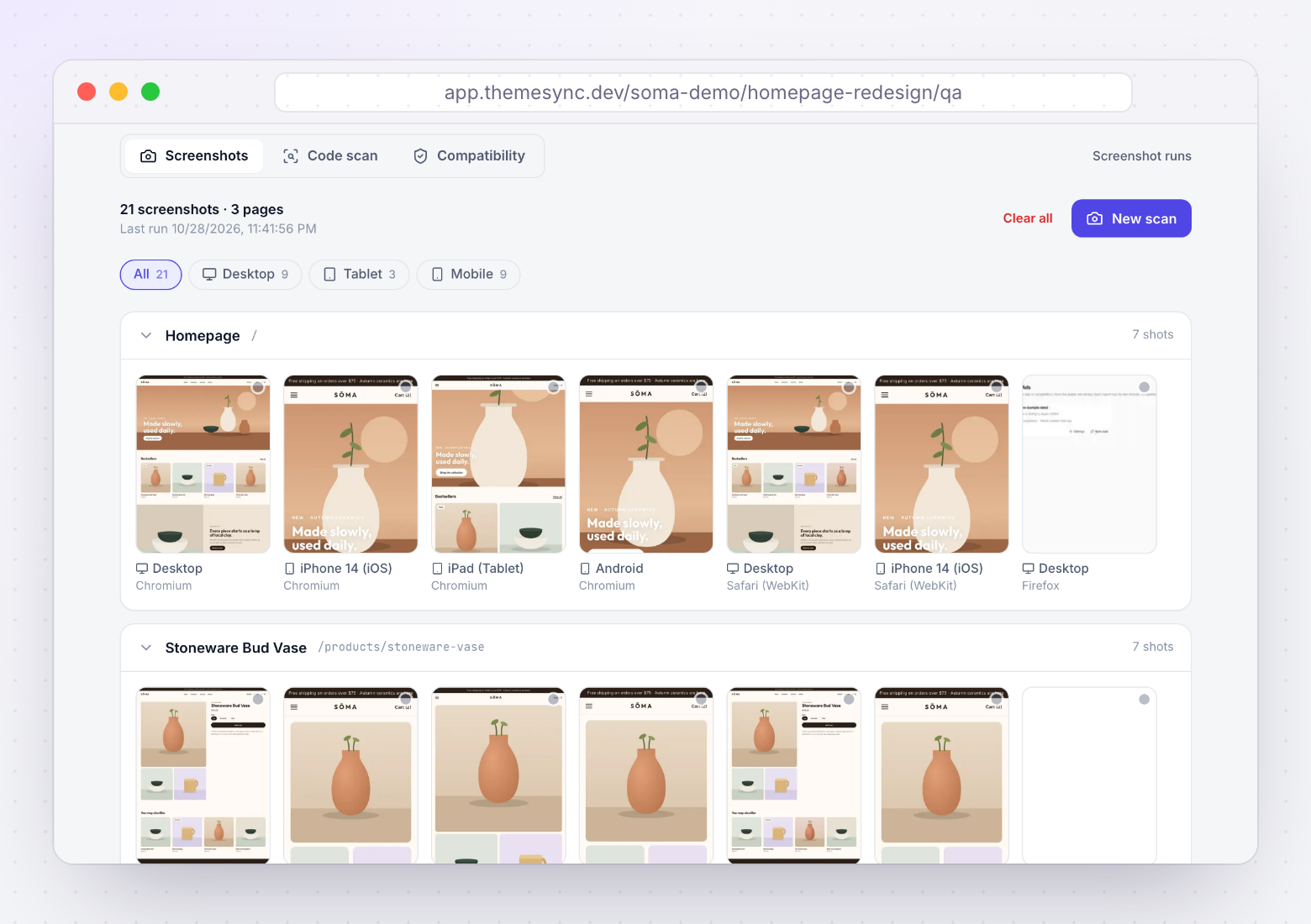
| New apps with blocks or embeds | Add a day per app to the QA week, tested on the preview and the cart path. |
| Content written during the build | Move round 1 later. Placeholder text gets feedback about words, not design. |
| Fixed launch date | Work backwards from launch. Make the content deadline the first hard date in the contract. |
Where ThemeSync fits
ThemeSync doesn’t plan the project or track the schedule. It runs three steps inside each plan: the review rounds, the consolidated feedback and the QA week. Screens are from a demo store.
More free resources
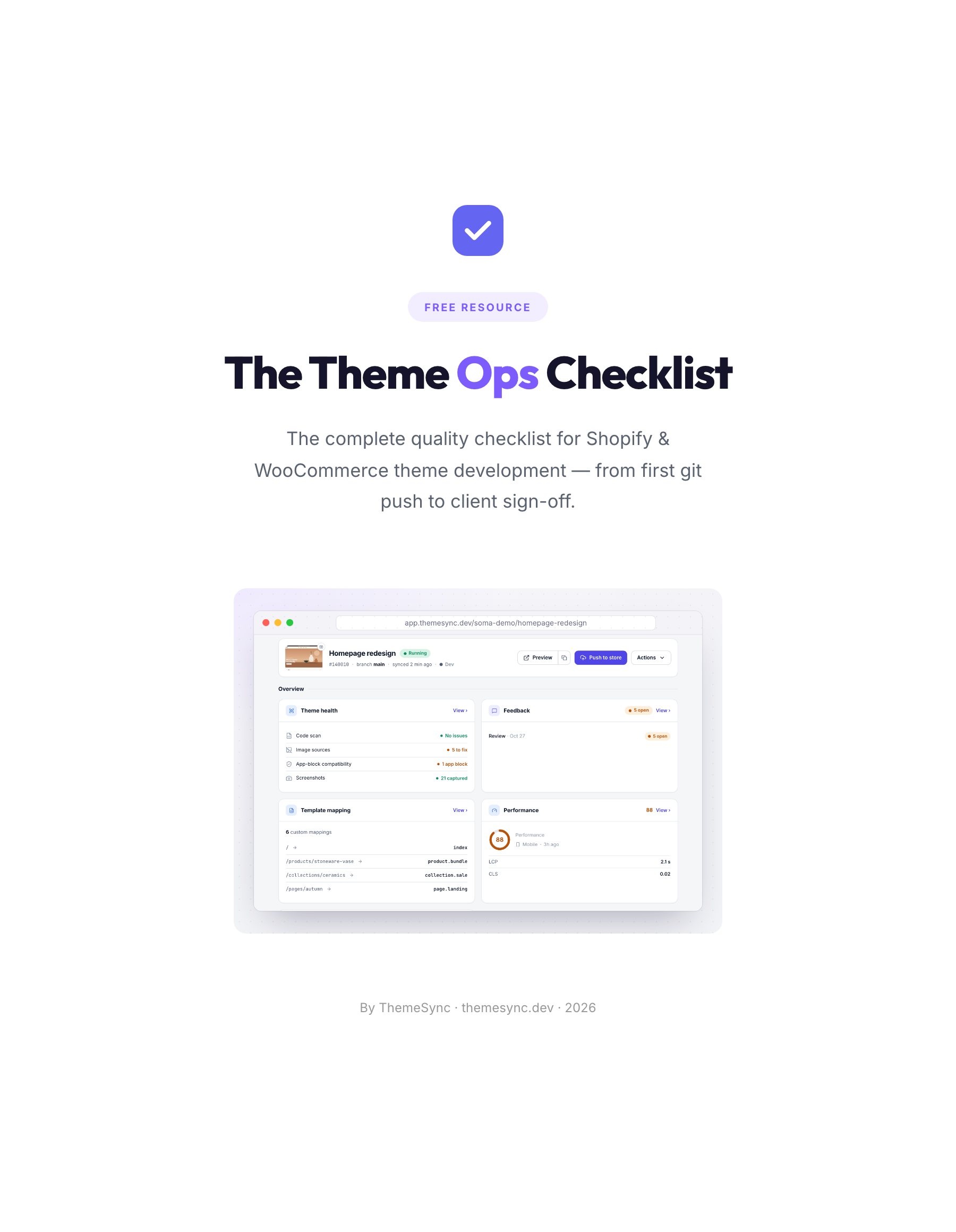 ChecklistThe Theme Ops ChecklistThe 86-point quality checklist for Shopify and WooCommerce theme projects, from the first git push to client sign-off. Print it or save it as a PDF.
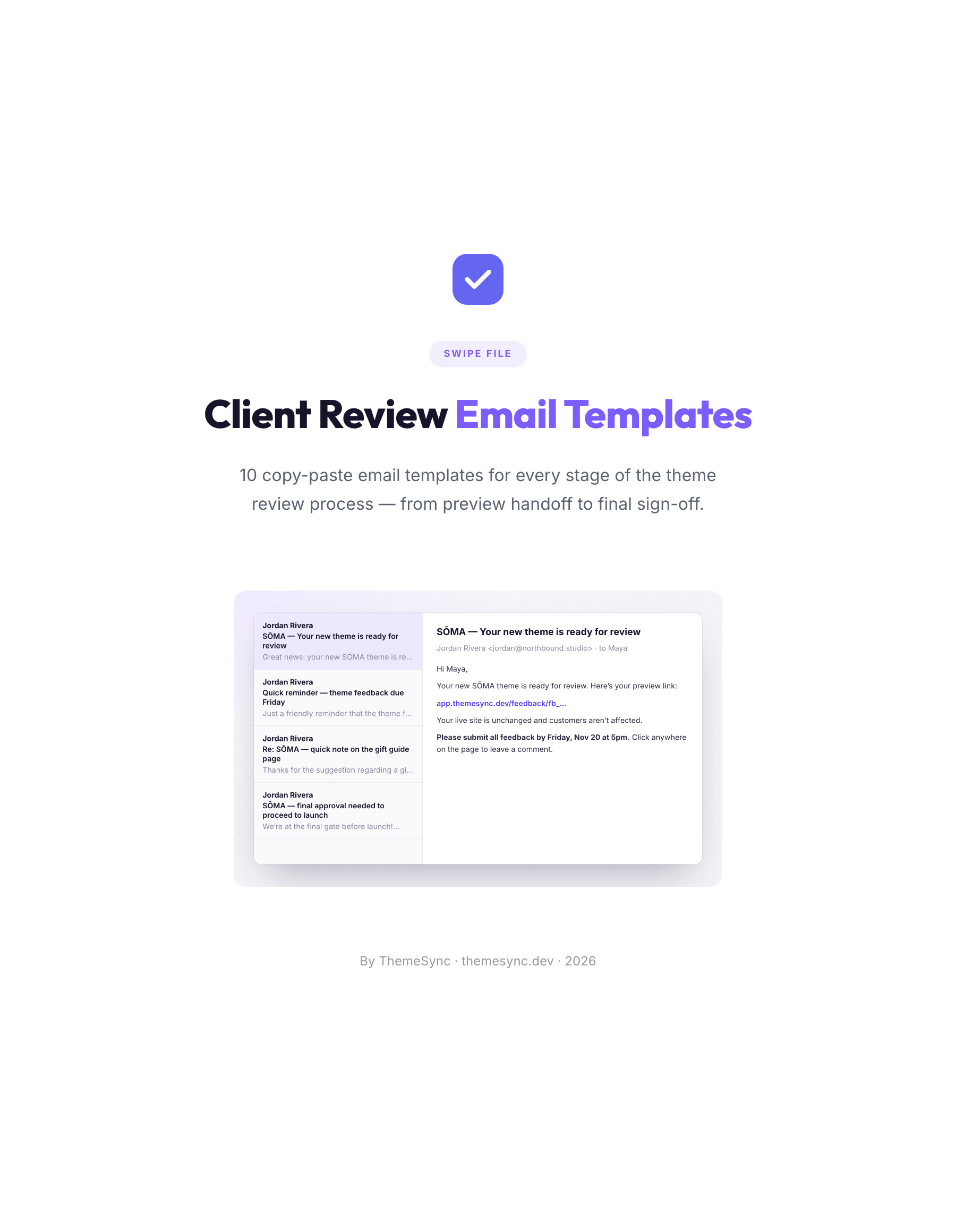 TemplatesClient Review Email Templates10 copy-paste emails for every stage of a theme review, from the preview handoff to final sign-off, including reminders and scope replies.
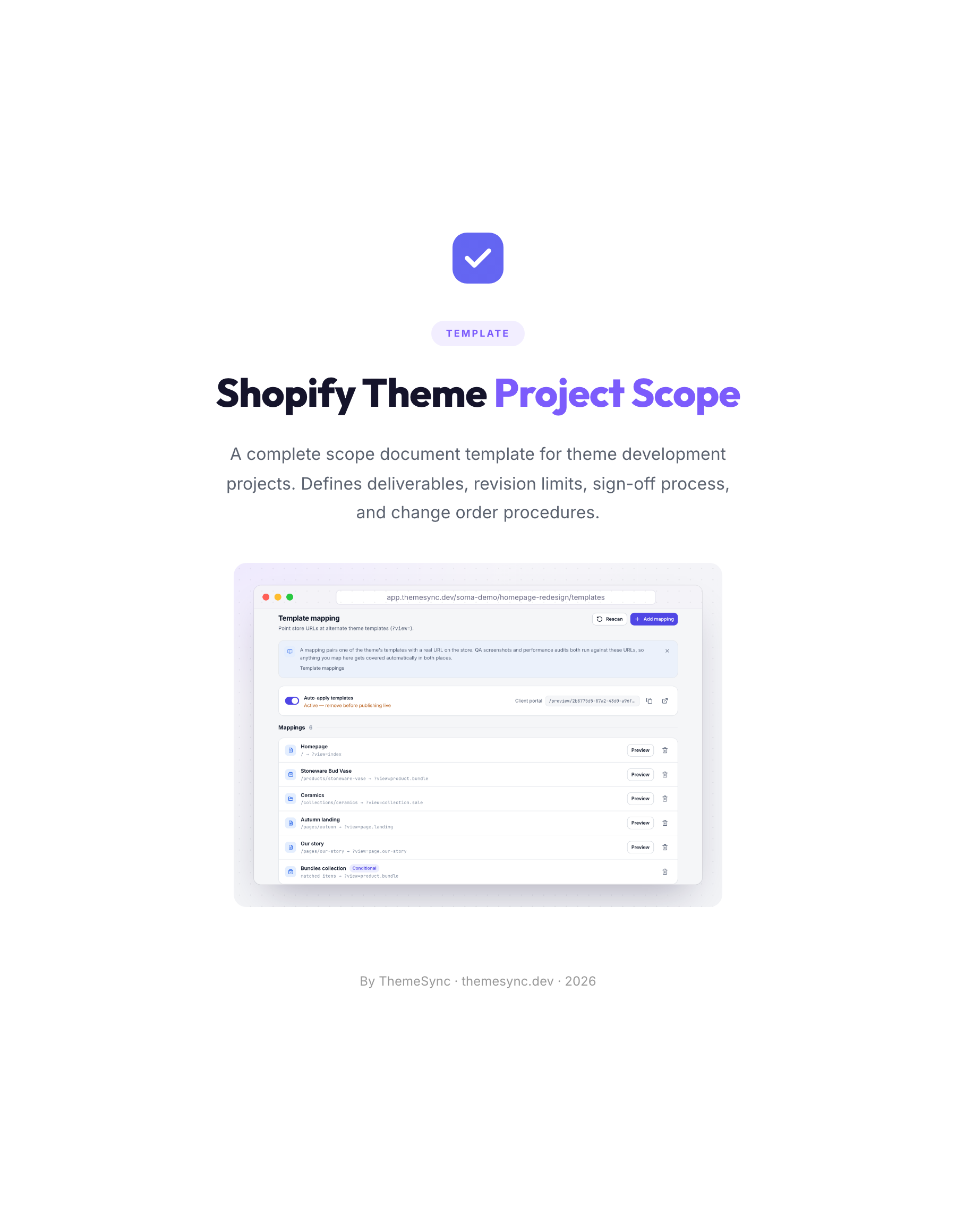 TemplateShopify Theme Project Scope TemplateA scope document for theme projects: deliverables, templates in scope, revision limits, the sign-off process and change orders.